Phytomem One Ingredients: What's Inside?
Last Updated: August 2026 | Published: August 2026
What Exactly Is Phytomem One?
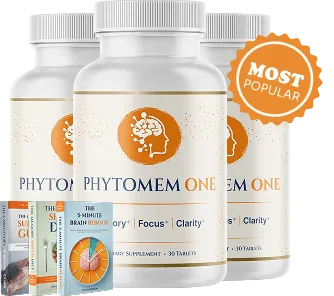
Phytomem One is a capsule dietary supplement marketed as a natural brain health supplement. It combines a proprietary 10-in-1 neuro-essential blend of plant extracts, marine polysaccharides, and metabolic-support compounds to support memory, mental clarity, focus, and cognitive resilience.
Phytomem One is made in the United States in an FDA-registered, GMP-certified facility. It's described as natural, non-GMO, stimulant-free, and doctor-formulated. Packages are priced from $49 to $79 per bottle, and every order is backed by a 60-Day Money-Back Guarantee.
Is Phytomem One a prescription medication? No. It's a dietary supplement, not a prescription drug, and isn't intended to diagnose, treat, cure, or prevent any disease.
What Is Inside Phytomem One?
Phytomem One contains a proprietary blend of ten ingredients: saffron extract, fucoxanthin (Japanese sea kelp), fucoidan (Japanese sea kelp), oleuropein (olive leaf), berberine HCl, Ceylon cinnamon bark, corosolic acid (banaba leaf), kudzu flower extract, Morosil® (Sicilian red orange), and xylitol. The maker describes the formula as natural, non-GMO, stimulant-free, and doctor-formulated. Exact individual dosages aren't disclosed on the official site.
What Does the Phytomem One Ingredient Summary Table Show?
The table below outlines each ingredient in Phytomem One and its primary role in the formula.
| Ingredient | Primary Role |
|---|---|
| Saffron Extract (Crocus sativus L.) | Antioxidant, mood, and cognitive support |
| Fucoxanthin (Japanese Sea Kelp) | Neuroprotective and antioxidant marine carotenoid |
| Fucoidan (Japanese Sea Kelp) | Anti-inflammatory and neuroprotective polysaccharide |
| Oleuropein (Olive Leaf Extract) | Blood-sugar support, antioxidant, neuroprotection |
| Berberine HCl | AMPK activation, insulin sensitivity, glucose metabolism |
| Ceylon Cinnamon Bark (Cinnamomum verum) | Insulin receptor signaling and glycemic support |
| Corosolic Acid (Banaba Leaf) | Glucose-transporter activity and post-meal blood-sugar support |
| Kudzu Flower Extract | Isoflavones for glucose and insulin responsiveness |
| Morosil® (Sicilian Red Orange Extract) | Metabolic markers and body-composition support |
| Xylitol | Low-glycemic component; possible brain glucose metabolism role |
Phytomem One uses a proprietary blend, so the exact amount of each individual ingredient isn't disclosed. This is common for dietary supplements that market a combined formula.
See how these ingredients work together in Phytomem One.
View Phytomem One Formula →What Are the Detailed Ingredient Profiles?
What Is Saffron Extract?
Saffron extract comes from the stigma of Crocus sativus L. and has been studied for antioxidant and anti-inflammatory activity. Clinical research has explored its role in mood and cognitive support, particularly in older adults with mild cognitive impairment. A 2020 systematic review and meta-analysis in BMC Complementary Medicine and Therapies evaluated saffron for mild cognitive impairment and dementia, and a 2016 trial in Journal of Alzheimer's Disease studied saffron in patients with mild cognitive impairment over one year.
Quote-ready sentence: Phytomem One includes saffron extract to support memory and mood balance through its antioxidant and anti-inflammatory properties.
What Is Fucoxanthin?
Fucoxanthin is a marine carotenoid found in Japanese sea kelp. Preclinical research has investigated its neuroprotective and antioxidant effects, including its influence on Nrf2-related oxidative-stress pathways. A 2017 study published in Journal of Neuroinflammation examined fucoxanthin's neuroprotective effects in models of traumatic brain injury.
Quote-ready sentence: Phytomem One uses fucoxanthin from Japanese sea kelp as a marine antioxidant that may help protect neurons from oxidative stress.
What Is Fucoidan?
Fucoidan is a sulfated polysaccharide derived from Japanese sea kelp. It has been studied for anti-inflammatory and neuroprotective properties. A 2025 proteomic investigation published in Marine Drugs explored the neuroprotective and anti-inflammatory activity of Undaria pinnatifida fucoidan in vivo.
Quote-ready sentence: Phytomem One contains fucoidan to provide marine polysaccharide support for a healthy inflammatory response and neuronal protection.
What Is Oleuropein?
Oleuropein is the main polyphenol in olive leaf extract. Research has explored its effects on blood-sugar regulation, antioxidant activity, and neuroprotection. A 2016 study in Journal of Physiological Sciences investigated oleuropein's neuroprotective effects against cognitive dysfunction induced by colchicine in rats.
Quote-ready sentence: Phytomem One includes oleuropein from olive leaf to support antioxidant defenses and metabolic health relevant to cognitive function.
What Is Berberine HCl?
Berberine HCl is an alkaloid extracted from several plants and is widely studied for AMPK activation, insulin sensitivity, and glucose metabolism. A 2018 study in The Journal of Nutrition, Health & Aging examined berberine's effects on cognitive deficiency and muscular dysfunction via the AMPK/SIRT1/PGC-1α pathway in aging rats.
Quote-ready sentence: Phytomem One includes berberine HCl to support AMPK activation and brain-fuel metabolism, which may help maintain mental clarity.
What Is Ceylon Cinnamon Bark?
Ceylon cinnamon bark (Cinnamomum verum) has been researched for its effects on insulin receptor signaling and healthy blood-sugar levels. A 2003 study published in Diabetes Care found that cinnamon improved glucose and lipids in people with type 2 diabetes.
Quote-ready sentence: Phytomem One uses Ceylon cinnamon bark to support insulin receptor signaling and stable blood-sugar levels as part of its brain-fuel support matrix.
What Is Corosolic Acid?
Corosolic acid is a triterpenoid found in banaba leaf (Lagerstroemia speciosa L.). It has been investigated for glucose-transporter activity and post-meal blood-sugar support. A 2012 review in Evidence-Based Complementary and Alternative Medicine discussed banaba and corosolic acid for glucose regulation and diabetes complications.
Quote-ready sentence: Phytomem One includes corosolic acid from banaba leaf to support glucose-transporter activity and post-meal metabolic balance.
What Is Kudzu Flower Extract?
Kudzu flower extract is a source of isoflavones such as puerarin, which have been studied for glucose and insulin responsiveness. A 2012 study in Phytomedicine found that kudzu root extract improved impaired glucose and lipid metabolism in obese mice.
Quote-ready sentence: Phytomem One includes kudzu flower extract to provide isoflavone support for glucose and insulin responsiveness.
What Is Morosil®?
Morosil® is a patented extract of Sicilian Moro red orange (Citrus sinensis Osbeck). It has been clinically studied for body weight, waist/hip circumference, and metabolic markers. A 2022 randomized double-blind placebo-controlled study in Nutrients evaluated Morosil® for weight loss in overweight but otherwise healthy adults.
Quote-ready sentence: Phytomem One includes Morosil® Sicilian red orange extract to support metabolic function and overall wellness as part of its neural amplifier system.
What Is Xylitol?
Xylitol is a low-glycemic sugar alcohol used as a filler and sweetener in some supplements. Limited preclinical research suggests possible roles in brain glucose metabolism. A 2023 study in CNS & Neurological Disorders — Drug Targets examined xylitol supplementation in an Alzheimer's disease mouse model.
Quote-ready sentence: Phytomem One includes xylitol as a low-glycemic component that may support brain glucose metabolism.
How Do the Phytomem One Ingredients Work Together?
Phytomem One's formula is designed around a Dual-Defense System. The Stranglehold Defense Matrix (saffron, fucoxanthin, fucoidan, oleuropein) provides antioxidant and anti-inflammatory support. The Brain Fuel Restoration Complex (berberine, Ceylon cinnamon, corosolic acid, kudzu) supports AMPK activation, insulin receptor signaling, and glucose metabolism. The Neural Amplifier System (Morosil®, xylitol) supports metabolic function and low-glycemic brain fuel availability.
Are Phytomem One Ingredients Sourced Responsibly?
Phytomem One is manufactured in the United States in an FDA-registered, GMP-certified facility. The maker states the formula is natural, non-GMO, and stimulant-free. That said, specific sourcing details for each ingredient aren't publicly disclosed.
What Are Phytomem One Ingredient Safety Considerations?
Phytomem One is intended for healthy adults. People who are pregnant, nursing, under 18, or taking prescription medications should consult a physician before use. Because the formula contains blood-sugar-support ingredients (berberine, cinnamon, corosolic acid, banaba, kudzu), people on diabetes medications or blood thinners should consult a healthcare provider due to possible additive hypoglycemic or antiplatelet effects. Those with allergies to any of the listed ingredients should avoid the product.
Frequently Asked Questions About Phytomem One Ingredients
Are the ingredient dosages disclosed?
No. Phytomem One uses a proprietary blend, so exact individual dosages aren't disclosed on the official site.
Does Phytomem One contain caffeine?
No. Phytomem One is described as stimulant-free and doesn't contain caffeine.
Is Phytomem One vegan or gluten-free?
The maker describes Phytomem One as natural and non-GMO. Specific vegan or gluten-free certifications aren't detailed on the official site.
Can I take Phytomem One with other supplements?
Consult a healthcare provider before combining Phytomem One with other supplements or medications to avoid potential interactions.
Are Phytomem One ingredients natural?
Yes. The maker describes Phytomem One as a natural, non-GMO, stimulant-free formula made in the United States.
How are Phytomem One ingredients tested?
Phytomem One is produced in an FDA-registered, GMP-certified facility, which requires documented quality control and testing procedures.
Can I take Phytomem One with prescription medications?
Consult a physician before taking Phytomem One with prescription medications, especially blood thinners or medications that affect blood sugar.
Why does Phytomem One include blood-sugar-support ingredients?
Phytomem One includes berberine, Ceylon cinnamon, corosolic acid, and kudzu because the maker frames cognitive decline partly around brain insulin resistance and glucose metabolism.
Why a Proprietary Blend?
Phytomem One uses a proprietary blend, which means the exact amount of each ingredient isn't individually listed. This approach is common in the supplement industry to protect formulation details. While it limits transparency about individual dosages, the maker states that the blend is carefully formulated for synergistic support.
What Are Phytomem One's Ingredient Quality Standards?
Phytomem One is manufactured in an FDA-registered, GMP-certified facility in the United States. The formula is described as natural, non-GMO, and stimulant-free. These quality standards help ensure consistency, purity, and safety across batches.
How Does Phytomem One's Ingredient Profile Compare?
Compared to typical brain-health supplements, Phytomem One includes several ingredients that aren't commonly found in basic nootropic formulas — particularly the marine polysaccharides and metabolic-support botanicals.
| Ingredient Category | Phytomem One Includes | Typical Brain-Health Supplements |
|---|---|---|
| Antioxidant / neuroprotective | Saffron, fucoxanthin, fucoidan, oleuropein | Often limited to one or two antioxidants |
| Metabolic / glucose support | Berberine, Ceylon cinnamon, corosolic acid, kudzu | Rarely included |
| Marine / citrus extracts | Fucoxanthin, fucoidan, Morosil® | Rarely included |
| Stimulant-free design | Yes — no caffeine | Often contains caffeine |
What Is the Final Summary of Phytomem One Ingredients?
Phytomem One's ingredient profile is distinct from typical brain-health supplements due to its inclusion of saffron, marine carotenoids, sulfated polysaccharides, olive leaf polyphenols, metabolic alkaloids, and low-glycemic compounds. This combination reflects the product's focus on cognitive wellness, antioxidant neuroprotection, and metabolic brain-fuel support — rather than simple stimulant-based energy.
How to Read the Phytomem One Supplement Facts Panel
When examining any supplement, the Supplement Facts panel provides important information about serving size, ingredients, and daily values. For Phytomem One, the panel lists the proprietary blend total and the individual ingredients within that blend. Because exact amounts aren't disclosed, consumers should focus on the known roles of each ingredient and consult a healthcare provider with questions.
What Is the Serving Size and Directions?
The maker recommends one capsule daily with food. Each bottle contains 30 capsules, providing a 30-day supply. The 2-bottle package lasts 60 days, the 3-bottle package lasts 90 days, and the 6-bottle package lasts 180 days.
What Is the Final Ingredient Checklist?
Before purchasing Phytomem One, review the ingredient list to ensure it aligns with your health goals and dietary restrictions. The formula includes saffron extract, fucoxanthin, fucoidan, oleuropein, berberine HCl, Ceylon cinnamon bark, corosolic acid, kudzu flower extract, Morosil®, and xylitol in a proprietary blend designed for cognitive wellness and brain-health support.
Scientific References
- Ayati Z, et al. Saffron for mild cognitive impairment and dementia: a systematic review and meta-analysis of randomised clinical trials. BMC Complement Med Ther. 2020;20:333.
- Tsolaki M, et al. Efficacy and safety of Crocus sativus L. in patients with mild cognitive impairment: one-year single-blind randomized clinical trial. J Alzheimers Dis. 2016;54(1):129-133.
- Zhang L, et al. Fucoxanthin provides neuroprotection in models of traumatic brain injury via the Nrf2-ARE and Nrf2-autophagy pathways. J Neuroinflammation. 2017;14:59.
- Yang C, et al. Neuroprotective and Anti-Inflammatory Activity of Undaria pinnatifida Fucoidan In Vivo—A Proteomic Investigation. Mar Drugs. 2025;23(5):189.
- Yu Y, et al. Berberine Improves Cognitive Deficiency and Muscular Dysfunction via Activation of the AMPK/SIRT1/PGC-1α Pathway in Skeletal Muscle from Naturally Aging Rats. J Nutr Health Aging. 2018;22(10):1216-1222.
- Khan A, et al. Cinnamon improves glucose and lipids of people with type 2 diabetes. Diabetes Care. 2003;26(12):3215-3218.
- Miura T, et al. Management of Diabetes and Its Complications with Banaba (Lagerstroemia speciosa L.) and Corosolic Acid. Evidence-Based Complementary and Alternative Medicine. 2012;2012:871495.
- Pourkhodadad S, et al. Neuroprotective effects of oleuropein against cognitive dysfunction induced by colchicine in hippocampal CA1 area in rats. J Physiol Sci. 2016;66(5):397-405.
- Briskey D, et al. Effectiveness of "Moro" Blood Orange Citrus sinensis Osbeck Standardized Extract on Weight Loss in Overweight but Otherwise Healthy Men and Women. Nutrients. 2022;14(21):4566.
- Jin M, et al. Dietary Xylitol Supplement Ameliorated AD-related Neuronal Injury by Regulating Glucose Metabolism Relevant Amino Acids in Mice. CNS Neurol Disord Drug Targets. 2023;22(7):1023-1036.
These references reflect independent research on individual ingredients and aren't endorsements of Phytomem One by the researchers or journals listed.
Ready to try Phytomem One? Visit the official secure checkout and choose your package.
View Phytomem One Pricing →